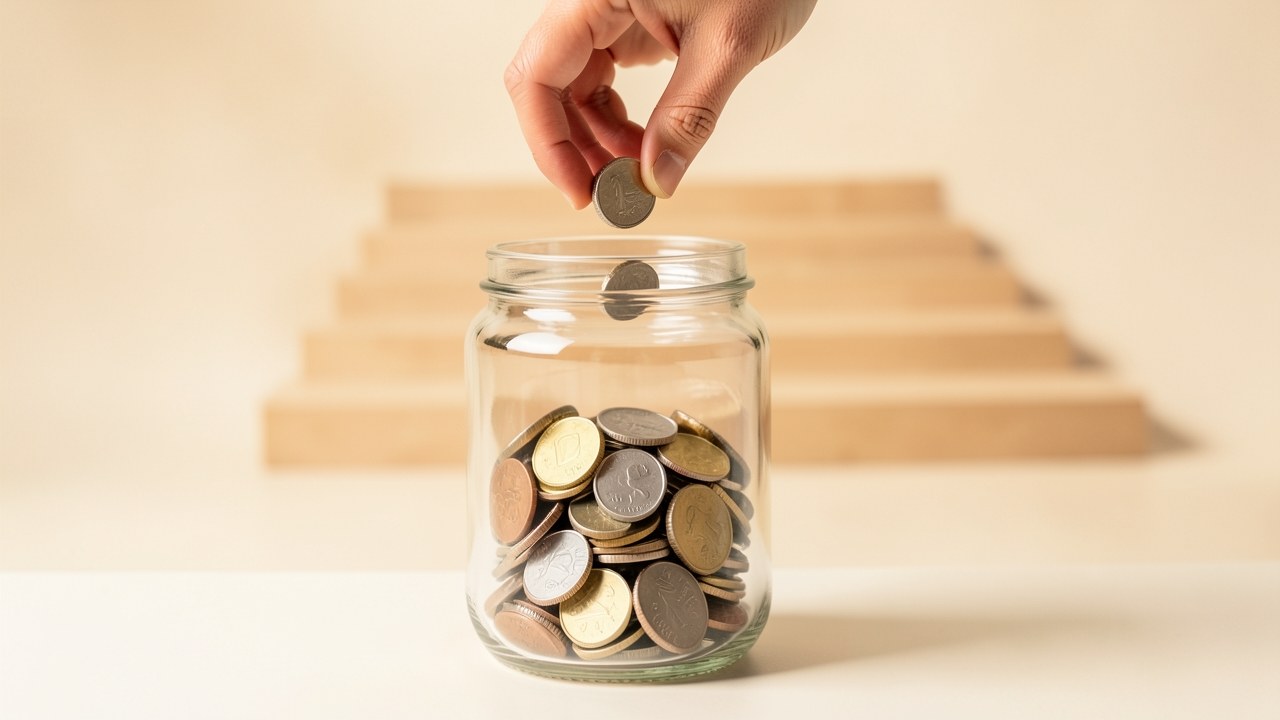
How Extra Payments Reduce Principal and Interest
For simple interest amortizing loans, as described by the CFPB, every payment you make first covers the interest that has accrued since your last payment, and the remainder reduces your principal balance. When you make an extra payment that goes entirely to principal, you lower the balance immediately. That means future interest is calculated on a smaller amount, so you save interest over the life of the loan. The effect is most powerful early in the loan term because early payments are largely interest, and reducing principal early cuts interest for the remaining years.
However, not all loans work this way. On a precomputed interest loan, your total interest is calculated in advance and added to the principal. Making an extra payment on such a loan generally does not reduce the principal or the total interest you owe. The CFPB explains this difference, especially for auto loans. So, before making extra payments, know which type of loan you have.
- Extra payments reduce principal, which lowers future interest charges on amortizing loans.
- The earlier you make an extra payment, the more interest you save because it cuts interest for the remaining term.
- Precomputed interest loans may not benefit from extra payments; check your loan terms.
- Always tell your servicer to apply the extra payment to the principal, not to future payments.
Sources: Consumer Financial Protection Bureau (CFPB), Bankrate
One-Time Extra Payment: Example
A typical illustration: On a $200,000, 30-year fixed-rate loan at 5% interest, a one-time extra payment of $1,000 can shorten your loan term by about four months and save roughly $3,420 in total interest, according to a mortgage payoff calculator example. The exact savings depend on your loan amount, interest rate, and when you make the payment. The earlier you make it, the greater the interest savings.
To model a one-time extra payment yourself, you can use the standard amortization formula with a spreadsheet: calculate the monthly payment using the loan amount, annual interest rate divided by 12, and the number of months. Then, for the month you make the extra payment, subtract the extra amount from the principal balance before calculating interest for the next month. Continue the schedule as usual; the loan will end earlier than the original term.
Sources: Calculator.net
Recurring Extra Payments: Example
Adding a fixed extra amount to each monthly payment is a common strategy. On a $300,000, 30-year fixed mortgage at 7% interest, adding $100 per month to your required payment can reduce your loan term by more than four years and save about $69,000 in interest. This example from a mortgage lender illustrates the power of consistent extra payments.
To model recurring extra payments, simply increase the payment amount by the extra figure each month. The extra portion goes directly to principal. You can see the loan pay off earlier than the original term because you are reducing principal faster.
Sources: Total Mortgage
Biweekly Payment Strategy
Paying half your monthly payment every two weeks instead of once a month is a popular way to make an extra payment each year. Because there are 52 weeks in a year, you make 26 half-payments, which equals 13 full monthly payments. On a $300,000, 30-year fixed mortgage at 7% interest, this strategy can shorten the loan term by about six years and save about $98,500 in interest, based on a mortgage lender's illustration.
You can implement biweekly payments yourself by simply making a payment every two weeks, but be sure to specify that the extra amount (the 13th equivalent payment's portion) is applied to principal. Some third-party biweekly programs charge fees for this service, but you can achieve the same effect on your own by adding 1/12th of your monthly payment to each regular payment, earmarked as principal. Check with your lender to ensure there are no prepayment penalties.
Sources: Total Mortgage, TransUnion
Lump-Sum Payment Considerations
A lump-sum payment—such as a tax refund, bonus, or inheritance—can be a powerful way to reduce your loan balance. The effect is similar to a one-time extra payment: you reduce principal, which saves future interest and can shorten the loan term. For example, on a $200,000, 30-year loan at 5%, a $1,000 lump sum can save about $3,420 in interest and shorten the term by four months, as earlier.
Sources: Consumer Financial Protection Bureau (CFPB), TransUnion, Calculator.net
How to Model Extra Payments with the Formula
You can model extra payments using the standard loan amortization formula: M = P × [r(1+r)^n] / [(1+r)^n - 1], where M is the monthly payment, P is the principal, r is the monthly interest rate (annual rate divided by 12), and n is the number of monthly payments. This formula gives the fixed monthly payment for an amortizing loan.
- Gather your loan details: principal balance, annual interest rate, and remaining term.
- Calculate your monthly payment using the formula M = P × [r(1+r)^n] / [(1+r)^n - 1] (r = annual rate/12, n = total months).
- Set up a payment schedule: for each month, compute interest = current principal × r.
- Subtract interest from your total monthly payment to get the principal portion.
- If you make an extra payment that month, subtract that amount from principal as well.
- Carry the new principal to the next month and repeat.
- Continue until the principal reaches zero; the final payment month is your new payoff date.
Sources: Total Mortgage
Frequently asked questions
Should I make extra payments or invest the money?
The decision depends on your interest rate and investment returns. If your loan has a high interest rate, paying it down early can provide a guaranteed return equal to that rate, which may beat low-risk investments. The CFPB suggests that if you have extra money, paying off the highest-interest loan first is generally the fastest way to save money over the long term. However, you should also consider maintaining an emergency fund and other financial priorities. There is no one-size-fits-all answer, so compare your loan rate with the expected return on investments.
Sources: Consumer Financial Protection Bureau (CFPB)How do biweekly payments work?
Biweekly payments split your monthly payment in half and you pay every two weeks. Because there are 52 weeks in a year, this results in 26 half-payments, which equals 13 full monthly payments per year—one extra payment annually. That extra payment goes toward principal, which speeds up payoff and saves interest. For example, on a $300,000, 30-year mortgage at 7% interest, biweekly payments could shorten the term by about six years and save about $98,500 in interest, according to a lender's illustration. You can do this yourself by making half payments every two weeks, but be sure to instruct your servicer to apply any extra amount to principal.
Sources: Total MortgageSources
- Tips for paying off student loans more easily — Consumer Financial Protection Bureau (CFPB)
- Stop Getting Sidetracked by Your Student Loan Servicer — Consumer Financial Protection Bureau (CFPB)
- Can I make additional payments on my student loan? — Consumer Financial Protection Bureau (CFPB)
- What's the difference between a simple interest rate and precomputed interest on an auto loan? — Consumer Financial Protection Bureau (CFPB)
- Extra Payment Calculator | With Lump Sum & Amortization — Total Mortgage
- Mortgage Payoff Calculator — Calculator.net
- Amortization Calculator — TransUnion
- Additional Payment Calculator — Bankrate